🟢 The “Véli” question: Can a 'good' idea become a market?
This is a topic I’ve been watching unfold for some time, and one I’ve chosen to remain relatively quiet about, as I know many lovely people involved in this field. But beyond the ‘feel-good’ aspect of it all, I believe it’s past time to switch to a more hardcore mode to get things done...
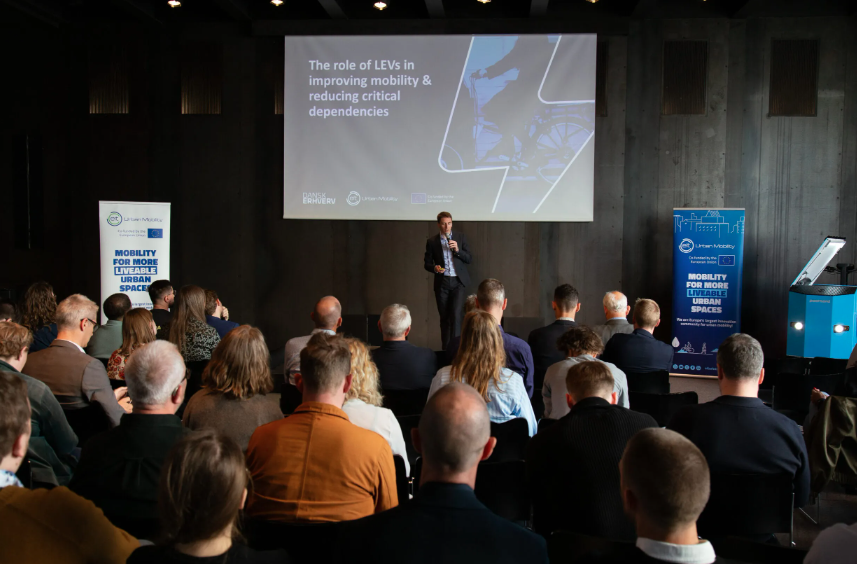
Across Europe, and particularly in France, we are seeing the emergence of a new vehicle category often referred to as “véli”: light, small electric vehicles positioned somewhere between a bicycle, a cargo bike, and a car. Outside France, these vehicles would fall under the broader LEV (Light Electric Vehicles) category, although not all of them are equipped with electric motors.
In any case, they are inventive, often beautifully designed, and clearly driven by good intentions.
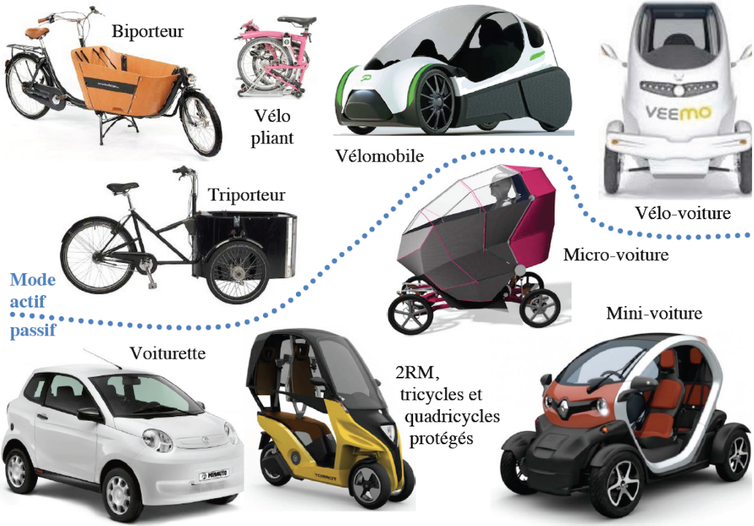
Many projects even aim to be quite smart about industrialization by reusing standard manufacturing components, pursuing modularity, consolidating spare parts, and simplifying assembly.
On paper, it all makes sense.
And yet, I've had a persistent discomfort around this category since its inception. I think it's worth mentioning, as this discomfort I have is quite symptomatic of most "feel good" tech or innovation initiatives I see across different ecosystems, when led by passion and a deep sense of ethics or personal value.
Because at the end of the day, passion never wins over any market.
The only question that matters
If you know me, even just a little bit, you know that for innovation, there is a preliminary question I keep coming back to, and that too many projects avoid:
What problem are you solving?
It's not societal aspiration, your moral position, or a vision of “what cities should become.” It's all about a real, concrete, painful problem, experienced by a clearly identified customer, and one that, if solved, creates clear and significant value.
And there are several possible qualities of this problem. One of them is that it should probably already be felt and, even better, expressed by your potential customer. If not, you will have to make her understand she's in pain. It's doable but quite tricky, especially in B2C markets where families and individuals don't have processes, KPIs, or dashboards about their way of life.
Remember also that when consumers are asked if they'd like to use a new product, they will mostly say yes if it seems nice. What they'll do with their hard-earned cash is a totally different story.
The "problem" starting point is not optional. Skip it and enter the "wishful innovation" zone (which is, always, a disaster in the making).
The elephant in the room already has two wheels...
The elephant in the room is that bicycles or cargo bikes already do 95% of the job these vehicles aim to do. So a ‘véli’ project that yields nothing more (or only marginal gains) will still be less industrializable, take a larger foothold in public spaces, and will have to explain how to operate; it's pretty much dead on arrival.
The uncomfortable truth is that most of these projects aim to replace a car or a small van for environmental reasons, yet I have never seen one that would make me pause and think, "Wow, this is so much better than a plain bike or cargo bike."
As a véli/LEV, you need to beat the bike on quite a few dimensions, as it's already cheap, well understood, regulated, insurable, infrastructure-compatible, easy to repair, culturally accepted, and already optimized by decades of use.
And if your only value proposition is that you have better weatherproofing, my friend, you're in for quite a shock when you'll discover that the countries with the most people actively cycling around have the worst weather (if not climate) in Europe.
Another hard truth is that very few véli/LEV designers have set foot in Utrecht or Helsinki, let alone done their homework on how high bike penetration is in these countries. They'd rather follow their instincts than leverage decades of hardcore problem-solving done at scale.
But then again, doing so would point to an obvious problem for the whole véli/LEV category: reducing the car footprint in cities or the countryside is not so much about reinventing the wheel (literally) as about infrastructure.

No European country has had to redesign its bikes since the invention of cargo bikes.
Try to fit a véli/LEV on a regular street or road, and no matter what, you'll face insurmountable safety problems.
“Doing the right thing” is not a strategy
Many véli/LEV projects are born from a deeply understandable impulse. We all get it. Cities are broken, cars are oversized, emissions matter, and admittedly, something must change. But markets only change and evolve with a powerful problem-solution fit, not only for your fandom and the very few militant customers, but for everyone else!
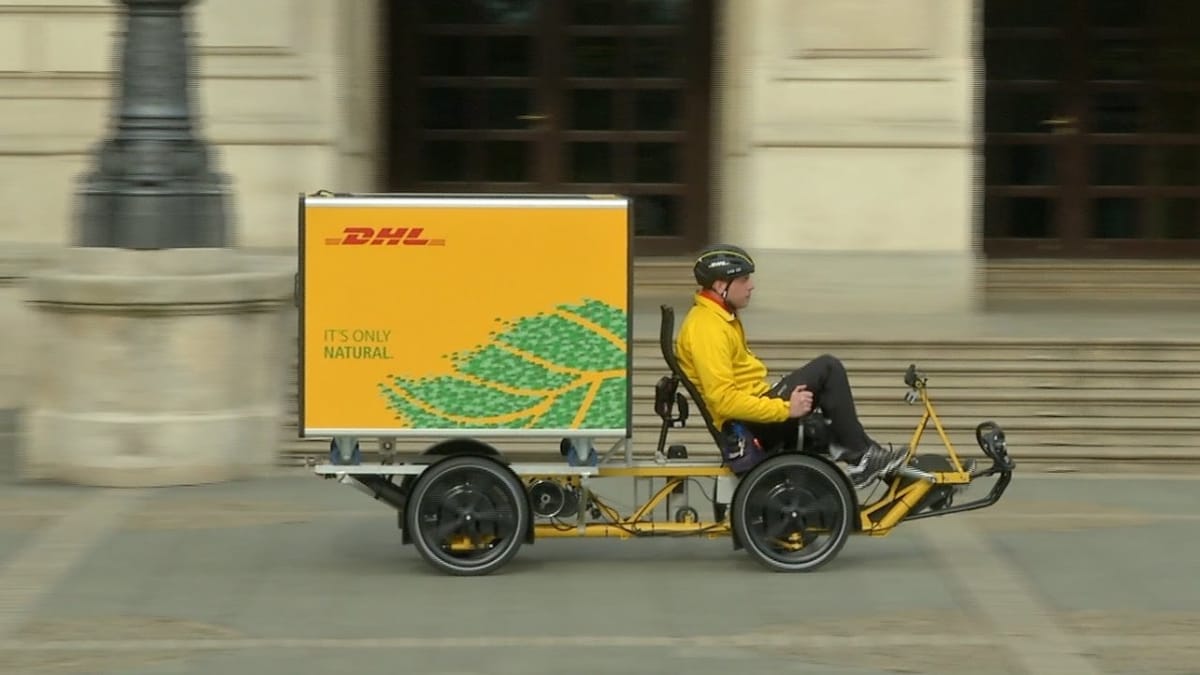
It is no coincidence that the only serious, long-term adoption of light electric vehicles has occurred in express logistics and last-mile delivery. DHL or UPS did not wait for anyone to explain what to do. Their core problem was improving downtown accessibility and reducing traffic congestion.
The problem was explicit, quantified, and expensive. You can split it quite easily in terms of time windows, labor costs, urban access restrictions, fleet optimization, and parcel density. Real pain points. Not abstract ideals.
Any véli/LEV entering this space today is not “early.” They are late, competing against deeply integrated solutions, and will have to admit that 'saving the planet' will be a side effect of a crucial optimization that has yet to be delivered.
Let me be clear: that doesn’t mean there is no room left, it means the bar is fucking high!
Tough Love? Sure.
I don't think the véli/LEV space is doomed. Is it currently overcrowded with answers and undernourished in questions? Sure. Is the vast army of hobbyists, tinkerers, and semi-amused industrials counter-productive? No.
But they sure need to level up their game.
If this category wants to exist (not even 'survive' as it has yet to take off), it needs to:
- Stop positioning itself as a moral alternative. Markets don’t buy virtue; they buy outcomes.
- Identify customers with acute pain, not abstract needs. “Urban mobility” is not a customer.
- Win decisively on one dimension. Not slightly better. 10x Better.
- Accept that many use cases do not require a new vehicle. Oftentimes, the right answer is: the bike already won.
- Think outside of the product box. Infrastructure (or lack thereof) will kill most initiatives and will change the slowest, no matter what.
This may sound harsh, but it comes from a place of love.
Final Thought
A véli/LEV should not exist because it feels right. It should exist because it unlocks significant, measurable value. Everything else is design exploration. Interesting if you have time to spare, but not a market.
For now, these initiatives are at the stage where "microbility" was a few years ago: a wishful vision that doesn't solve any real problems and has ended up quietly dying away after much hype and significant investment. And with the véli/LEV, we don't even have this level of crazy funding to begin with...
Meanwhile...
 Linda Lew
Read more on this...
- Leveraging European Battery Production to Achieve Net-Zero with LEV (2024).
- ERTRAC Report on LEV Urban Mobility (2023).
- Small Electric Vehicles, An International View on Light Three- and Four-Wheelers (2021).
 National Authorities