
China is great again...

We can officially say that the world has now awakened to China's rise.
It's always funny to have seen such a tidal wave coming from far out on the horizon while everyone was carelessly sunbathing on the beach. I remember about ten years ago, when discussing with one of the directors of one of the largest European public investment banks, he was stunned after visiting Shenzhen and said, "It wasn't a fisherman village anymore." In 2015? You bet it wasn't anymore...
Back to 2026, and Tesla is now trying to fend off BYD, now the official #1 EV company worldwide. Here again, the signals were talking loudly; you just had to have a job whose salary wouldn't depend on not listening to them.
What can I say? Very few corporations in Europe can play a five- or ten-year game (which admittedly is a tad frustrating when your core business is about strategy and innovation). Not to mention Western public institutions' storytelling, convincing themselves that history is still on their side.
All that is fine.
I wanted to share with you today, January 21 of 2026, that the memo about China has now reached everyone: WIRED has just issued a special China issue, updating everyone on the new world order.
 WIRED
WIRED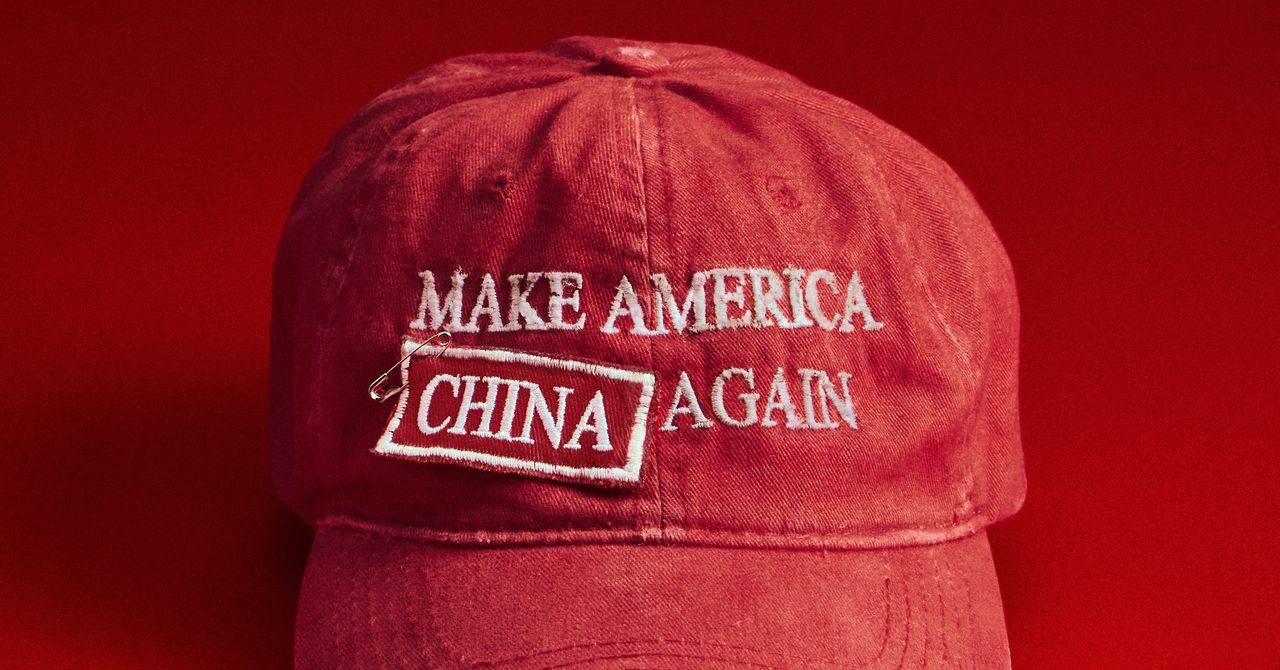
The Chinese century isn’t announced by a flag planted on the Moon or a single breakthrough technology. It shows up in batteries, logistics, industrial speed, urban systems, algorithms, and everyday objects. It’s not spectacular. It’s systemic.
Speed, iteration, and industrial density are no longer execution advantages; they are innovation capabilities. While Western companies debate roadmaps, Chinese ecosystems compress learning cycles through sheer volume. Factories double as R&D labs. Cities are testbeds. Regulations are not an afterthought, but part of the design space.
“Made in China” no longer means cost optimisation at the end of the value chain but architectural control at the outset. Batteries are the perfect example. They are not just components; they are choke points. Whoever masters them shapes mobility, energy transitions, and geopolitical dependencies. The same logic applies to robotics, AI deployment, clean tech, and advanced manufacturing. Innovation here is less about invention than about orchestration.
I still believe that in the West, notably in Europe, there are lessons to be learned and edges to be built. If only by understanding that, beyond technological capacity, scale has become the most strategic weapon in itself. And it seems, albeit slowly, interesting things are shaping up in Europe, like the Europe Inc initiative...
A startup from California can expand and raise money all across the United States. But our companies still face way too many national barriers that make it hard to work Europa-wide, and way too much regulatory burden. – Ursula von der Leyen, Oct 2024
But for now, maybe you should read the WIRED article : )
(*) Ironically enough, shaping up Europe to allow us to scale innovation and compete with China will, in turn, unlock how we will fend off US imperialism.


